Presidential Task Force on Combating Antisemitism and Anti-Israeli Bias
About the Task Force
Among the repercussions of conflict in the Middle East have been the loss of family and friends among many members of our community, as well as feelings of uncertainty, abandonment, mistrust, and fear. Incidents of bias and hate against Jews and Israelis and against Muslims, Palestinians, and other people of Arab descent have risen across the country. Reports of antisemitic, anti-Muslim, and Anti-Arab acts on our campus have grown, and the sense of belonging among these groups has been undermined. We need to understand why and how that is happening—and what more we might do to prevent it.
On January 19, 2024, President Alan M. Garber announced two presidential task forces: one devoted to combating antisemitism and one devoted to combating anti-Muslim and anti-Arab bias. Though differently focused, the groups are similarly charged with:
- examining recent history and current manifestations of bias;
- identifying the causes of and contributing factors to bias-based behaviors on campus;
- evaluating evidence regarding the characteristics and frequency of these behaviors; and
- recommending approaches to combat bias and to mitigate its impact on campus.
Read below for more information on the Presidential Task Force on Combating Antisemitism and Anti-Israeli Bias. For information on the other presidential task force, see Presidential Task Force on Combating Anti-Muslim, Anti-Arab, and Anti-Palestinian Bias.
The Presidential Task Force on Combating Antisemitism and Anti-Israeli Bias will examine the recent history of antisemitism and its current manifestations on the Harvard campus. It will identify causes of and contributing factors to anti-Jewish behaviors on campus; evaluate evidence regarding the characteristics and frequency of these behaviors; and recommend approaches to combat antisemitism and its impact on campus.
The task force’s work will encompass three areas:
- Outreach and listening tours to document experiences of antisemitism across the Harvard community, building on and learning from previous work done in this domain;
- Historical analysis, focusing on the experiences of and attitudes towards Jewish and Israeli members of the Harvard community and how they have been affected by local and global events;
- Collection and analysis of data from members of the Harvard community, in order to characterize the nature, extent, and proximate causes of antisemitism in the Harvard community.
The above three tasks will help identify actions that can be taken to address bias on a rolling basis and will culminate in a report and set of recommendations to the President. The recommendations may touch upon student life, supportive measures, School and University policies, education, and training, as well as other areas related to the climate on campus. The President is committed to bringing the recommendations to the members of the Academic Leadership Council, including the deans, on a rolling basis so that they might consider, refine, and implement interventions within the Schools.
Timeline
The task force will begin work simultaneously in its three areas of focus. During the first weeks of public engagement, however, the task force will prioritize outreach and conduct listening tours to understand experiences of community members and learn from work already done internally and externally as well. The task force may produce interim recommendations shortly after the conclusion of this listening period. Upon completing its work, the task force will issue a final report with its findings and recommendations. Updates on the task force’s progress will be posted on this page.
Process
The task force aims to carry out its work in a transparent and timely manner while proceeding with care and empathy. Its ongoing efforts, including descriptions of analyses and methodologies utilized, will be published on this page. The task force will work in close collaboration with the Task Force on Combating Anti-Muslim and Anti-Arab Bias throughout the duration of its activity in order to coordinate efforts and methodologies, although each group will have the flexibility to pursue additional sources of information and consider interventions independent of the other.
Contacting the Task Force
The task force seeks the observations and advice of members of the Harvard community at all levels, and may be reached at AntiSemitismTaskForce@harvard.edu.
Note, however, that the task force is not responsible for addressing specific crimes, bias incidents, or bullying concerns, or enforcing University policies, including those related to protests. Such responsibility lies with the University and the Schools. Please refer to the resources listed on the University’s Resources in Times of Crisis website for further information in this regard.
Furthermore, it is beyond the task force’s mandate to comment on specific incidents that have transpired or might transpire on campus during the course of its work.
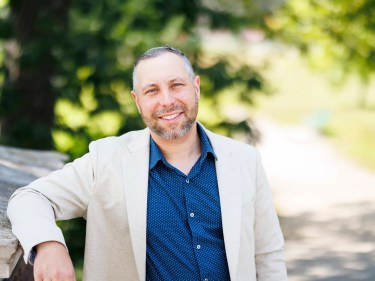
- Jared Ellias, co-chair, Scott C. Collins Professor of Law at Harvard Law School
- Derek Penslar, co-chair, William Lee Frost Professor of Jewish History in the Faculty of Arts and Sciences
- Danielle Allen, James Bryant Conant University Professor
- Boaz Barak, Gordon McKay Professor of Computer Science in the Harvard John A. Paulson School of Engineering and Applied Sciences
- Jesse M. Fried, Dane Professor of Law at Harvard Law School
- Jerome Groopman, Dina and Raphael Recanati Professor of Medicine at Harvard Medical School
- Julia Book Motzkin, Student at Harvard Kenneth C. Griffin Graduate School of Arts and Sciences
- Nim Ravid, Student at Harvard College
- Vicki Rosen, Professor of Developmental Biology at Harvard School of Dental Medicine
- Kay Kaufman Shelemay, G. Gordon Watts Professor of Music and Professor of African and African American Studies
- Andrew Teeter, Professor of Hebrew Bible at Harvard Divinity School
- Sherri Charleston, advisor, Chief Diversity and Inclusion Officer
- Ara Gershengorn, advisor, University Attorney
- Robin Glover, advisor, Associate Provost for Student Affairs
- Jonah Steinberg, advisor, Executive Director Emeritus at Harvard Hillel
Preliminary recommendations
On June 26, 2024, the Presidential Task Force on Combating Antisemitism and Anti-Israeli Bias released a set of preliminary recommendations. These represent first steps in the University’s ongoing work in this space.
Updates on implementation
Since its inception, the Task Force has been engaged in outreach across the University community to learn and inform how to best address instances of bias on campus, provide additional support services for students and other Harvard community members, and promote an atmosphere of civil discourse. Some of this work, both University-wide and School-specific, is highlighted below. Other efforts not noted here are underway as the University continues to embed this work in Schools, departments, and programs throughout the community.
Much of this work builds upon actions that were already in progress across Harvard prior to the Task Force establishment, while others are new. We will continue to expand upon these efforts as part of our ongoing work.
The safety and wellbeing of our students is our highest priority. Harvard has taken steps to strengthen security on campus, to deter and denounce acts that threaten the safety of individual students, and to connect students with university resources and support.
- Harvard has deployed additional law enforcement resources to protect students and ensure the safety of the entire community. The University has increased coordination between the Harvard University Police Department and local and federal law enforcement to assess and respond to any potential or actual threats to the Harvard community. When circumstances warrant, the University has restricted access to Harvard Yard (the center of its Cambridge campus) to limit outside disruptions, better manage campus spaces, and ensure student safety.
- Harvard has established 24/7 reporting mechanisms to allow community members to report incidents of bias anonymously.
- Harvard has provided specialized resources and training to those who adjudicate complaints under the University’s Nondiscrimination and Antibullying Policies.
- In fall 2023, Harvard College formed a Task Force on Online Harassment to serve as a centralized point of contact for issues relating to doxxing, online harassment, and online security.
- The University developed and distributed a guide for Protecting against Online Abuse and Harassment to help students, faculty, and staff recognize and report online harassment. HUPD, working with Harvard’s information security team, has processes in place to receive and act on these reports.
- The University also secured additional trauma-informed counseling resources through Harvard Counseling and Mental Health Services, prioritizing awareness of and access to its mental health and counseling resources, including the 24/7 CAMHS Cares line and in-person and virtual counseling support offerings.
- In January 2024, Harvard University Health Services removed visit limits for outpatient mental health care and medical consultations under Harvard’s student health insurance plan.
- Harvard launched a new support and resources website, Resources in Times of Crisis, to provide community members with a central hub of resources for personal safety, online safety, and mental health and community support.
- Harvard engaged with the leadership of Sidechat, a social media app that allows college students to post anonymously. Though Harvard has no relationship to Sidechat, the University asked the app to strictly enforce its content-moderation policies.
While the right to protest and dissent is a tenet of free expression, Harvard has made it clear that disrupting University activities or preventing members of our community from exercising their rights to learn, study, work, and live at Harvard goes against our values and policies. At the start of the 2024 fall term, this topic was the subject of multiple communications to the Harvard community and several new and updated policies.
- In January 2024, University leadership issued a community-wide message reaffirming Harvard’s commitment to its University-Wide Statement on Rights and Responsibilities and offering further guidance for planned expressive activity, including protests, for students, faculty, staff, and disciplinary boards. This Guidance on Protest and Dissent identifies campus locations in which protests are prohibited and specific protest actions that are barred.
- Several Schools have adopted or are in the process of adopting policies or guidance in addition to the Statement.
- On August 1, 2024, the Office of the Executive Vice President issued a community-wide message sharing updated information on Campus Use Rules, which were updated to establish uniform rules across all Schools and set clear expectations for the use of campus spaces and the enforcement of applicable policies. On August 30, the office sent a community-wide message reaffirming that activities that violate those rules, time place and manner restrictions, or other University policies will be addressed promptly.
- On August 29, 2024, the Office of the President issued a community-wide message noting the importance of ensuring that disagreements can be openly expressed, individually or collectively, without infringing on the rights of others; that those who fall short will be held accountable for their actions; and that the Harvard community categorically rejects bias or hate directed at any individual or group and will not tolerate harassment, intimidation, or threats.
- On September 5, 2024, University leadership sent a community-wide message on online harassment, specifically noting that doxxing violates two overlapping University policies and is subject to disciplinary action. The policies prohibit “intense personal harassment” under the University-wide Statement on Rights and Responsibilities (USRR) and “bullying” under the Non-Discrimination and Anti-Bullying Policies (NDAB).
- In January 2025 the University issued guidance clarifying that its Non-Discrimination and Anti-Bullying Policies (“NDAB”) use the International Holocaust Remembrance Alliance (“IHRA”) definition of antisemitism and consider the examples accompanying the IHRA definition to the extent that those might be useful in determining discriminatory intent.
- Harvard will publicly reaffirm at least annually that antisemitism will not be tolerated, and will, for the next five years, report annually on the university’s response to discrimination or harassment based on Title VI-protected traits and will provide transparency, consistent with state and federal privacy laws, regarding discipline outcomes in Title VI matters.
Reports of antisemitic harassment, threats, and intimidation are taken seriously, and are reviewed and addressed in accordance with School and University policies and procedures. Harvard has raised awareness across the community on the recent steps to strengthen reporting and processing of complaints of harassment and any other concerning act or behavior.
- In July 2024, Harvard adopted the University Committee on Rights and Responsibilities (UCRR) procedures to standardize fact-finding investigations for incidents involving students from two or more Schools. At Harvard, each School is responsible for disciplinary decisions for its own students; but this procedural change will help ensure that disciplinary boards at the Schools are working from the same set of facts to inform their proceedings and decisions.
- Harvard has made clear that disruption of University activities will be accorded the same treatment, regardless of the content of the demonstration. Similarly, University leadership has issued clear statements that participation in encampments or other protests that violate Harvard’s policies will result in disciplinary action.
- In October 2024 the Faculty of Arts and Sciences launched a Committee to Review the Administrative Boards. The committee is charged with a review of the Administrative Boards of Harvard College and the Graduate School of Arts and Sciences, and will specifically focus on conduct policies.
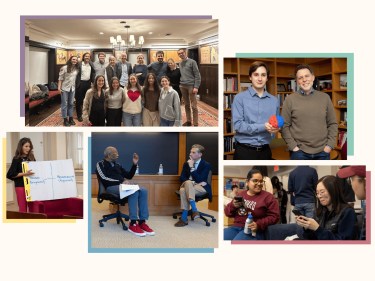
Building on initiatives from spring 2024, Harvard has pursued efforts across the University to bring our community together for respectful discussion and debate on difficult or controversial issues. Below are a few highlights, with more detailed information and additional activities and events provided on our Harvard Dialogues webpage.
- Harvard College has continued to advance its Intellectual Vitality Initiative, an effort focused on promoting respectful dialogue, open and rigorous inquiry, and thoughtful listening through a series of events, programs, and curriculum offerings. Along with a new website to increase awareness, additional efforts include sponsoring civil disagreement fellowships for House tutors and working lessons about civil disagreement into the College’s Expository Writing class. Additionally, members of the College class of 2028 completed the Perspectives Program, which teaches students to engage in dialogue across differences.
- In January 2024, Harvard College and PEN America hosted the Intellectual Vitality and Free Expression Student Summit aimed at fostering open, productive communication.
- As of spring 2024, the Edmond & Lily Safra Center for Ethics began engaging in a Center-wide effort to expand its longstanding work on civil discourse, including a new Fellowship in Values Engagement. The Fellowship works with resident tutors to foster intellectual vitality by promoting ethical reflection and a culture of civil disagreement in undergraduate community life.
- Following the work of its Candid and Constructive Conversations Working Group, Harvard Kennedy School is implementing recommendations on building a stronger culture of engagement, including through new training modules on civil resistance and modeling difficult conversations.
- As a continuation of work over the last several years, Harvard Law School has developed and shared best practices for productive classroom discussion, built difficult conversation modules into first-year student orientation, piloted a negotiation requirement for graduation, and adopted rules that ensure that student remarks in the classroom will not leave the classroom.
- Based on the preliminary recommendations of the Task Force, the Presidents Building Bridges Fund was launched in Fall 2024 to promote a culture at Harvard that fosters community between affinity groups and encourages constructive dialogue on interfaith and/or intercultural issues. In February 2025, four student-led projects within Harvard College, Harvard Law School, and the Harvard Kenneth C. Griffin Graduate School of Arts and Sciences were awarded funding. The projects funded are focused on building community across different faiths, cultures, and backgrounds and provide unique opportunities for students to engage in dialogue on complex issues and topics outside of the classroom setting.
Harvard has also prioritized efforts to affirm and build a feeling of belonging among Harvard’s Jewish students, faculty, and staff. The University has stated unequivocally its commitment to ensuring every member of the community has the opportunity to pursue their academic and professional work free from harassment and intimidation, and with the knowledge that their presence is more than simply welcomed but is essential to fostering an environment of achievement and excellence.
- Harvard has organized community support sessions led by the counseling team and Harvard’s chaplains, which comprise more than 30 faith leaders representing Judaism and several other religions.
- The University has clarified that its inclusion and belonging efforts must reach all members of our community and has ensured that its “Belonging Student Leadership Council” includes Jewish student representation.
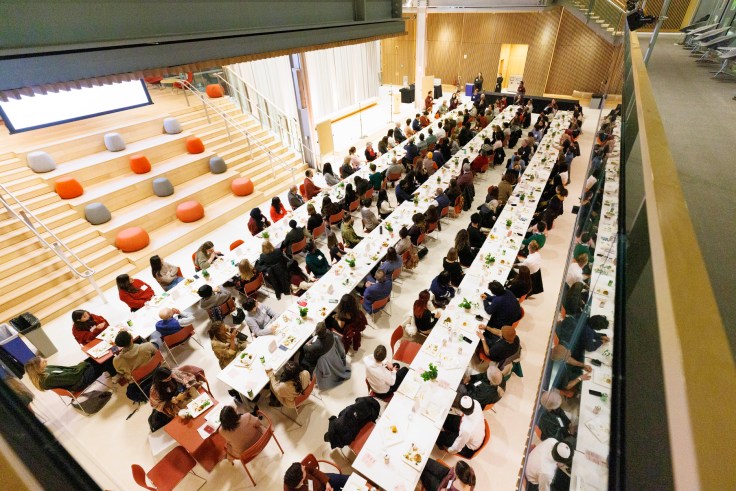
- Harvard leaders attend dinners at Harvard Hillel, Chabad, and other Jewish organizations across our community to hear concerns and suggestions on improving the campus climate.
- More than 150 graduates and their families gathered at the Student Organization Center at Hilles prior to the 2024 Commencement for a Jewish Affinity celebration. The celebration was organized and supported through the collaborative efforts of Harvard student groups; the Office of Equity, Diversity, Inclusion, and Belonging; Harvard Hillel; the Harvard Alumni Association; the Council of Deans of Students; the Commencement Office; the DIB Leadership Network; and student, staff, and faculty volunteers.
- Based upon the preliminary recommendations of the Task Force released in June 2024, as well as on conversations with key stakeholders such as Harvard students, parents and rabbinical leaders, Harvard University Dining Services (HUDS) and Harvard College has expanded its Kosher dining options at Hillel and other dining facilities on campus.
- In August 2024, Hillel and the Harvard College Dean of Students Office hosted a webinar, open to all students in the class of 2028, that highlights Jewish life at Harvard, including ways in which non-Jewish students can support and engage with the community.
- In December 2024, Harvard launched a webpage to provide information and guidance for planning events and programs with inclusion in mind. The webpage includes a multifaith calendar, a glossary of religious observances, and suggestions for inclusive catering. It also provides links to Harvard Divinity School webpages with more detailed information.
Harvard has undertaken enhanced training for our leaders, faculty, students and staff on how antisemitism can manifest and how to address its effects. Across the University, Schools are working to improve the academic and campus climate.
- In April 2024, more than 100 senior leaders participated in an Inclusion & Belonging Leadership Summit: Committed to Combating Hate and Bias, which focused specifically on antisemitism and other forms of hate. Further training on antisemitism is planned for the 2024-2025 academic year.
- In April 2024, the University hosted the inaugural Inclusion & Belonging Summit, which featured the theme: Committed to Combatting Hate and Bias. The summit brought together leaders from across the University to build capacity for inclusive leadership through training and information sharing. Breakout sessions explored the history and current manifestations of Antisemitism, Islamophobia, Anti-Israeli, Anti-Arab, Anti-Muslim, and Anti-Palestinian biases and approaches to recognizing, disrupting, and mitigating impact on campus.
- In September 2024, President Garber and other university leaders participated in a two- day College and University Presidents Summit on Campus Antisemitism hosted by Hillel International, the American Jewish Committee, and the American Council on Education.
- In October 2024, the College Dean of Students Office (DSO) provided antisemitism training for all Tutors, Proctors, and Peer Advising Fellows.
- In October 2024, Harvard hosted “Honoring our Shared Humanity: Countering Antisemitism and Anti-Israeli Bias. This seminar for students explored the history of antisemitism and anti-Israeli racism. A key focus of the session was providing practical strategies to combat antisemitism and anti-Israeli biases on campus. The session aimed to foster more inclusive and equitable environments by addressing both interpersonal and systemic forms of discrimination.
- Harvard Business School has instituted a pilot program with Project Shema, a training and support organization focused on addressing contemporary antisemitism, to offer antisemitism training to all MBA students.
- Harvard’s School of Engineering and Applied Sciences hosted a workshop in February 2025 on combating antisemitism.
- Harvard’s Bok Center, which provides teaching and learning resources for faculty and students, offered a series of workshops on ways to incorporate antisemitism training into educational sessions.
- Clinicians and staff from Harvard’s Counseling and Mental Health Services (CAMHS) have received cultural competency lectures from Rabbi Getzel Davis, Harvard Chaplain, to provide a deeper understanding of antisemitism and enable better care for students.
- CAMHS continues its work to identify culturally sensitive therapists both locally and through Timely Care, the telehealth counseling service available to eligible Harvard University students.
new resource spotlight
President’s Building Bridges Fund
Inspired by the recommendations from the task forces, the Building Bridges Fund, a new initiative of the Office of the President, aims to promote a culture at Harvard that fosters community between affinity groups and encourages constructive dialogue on interfaith and/or intercultural issues.
News from the Task Force
Student-led projects tackle campus divisions
Presidential initiative backs efforts to encourage, facilitate constructive dialogue
Harvard University president announces President’s Building Bridges Fund
October 28, 2024

Presidential task forces deliver preliminary recommendations to Garber
June 26, 2024
From the Antisemitism Task Force: How to Repair a Fractured Harvard
May 23, 2024

Co-chairs of task forces share updates on community engagement
April 9, 2024
Presidential task forces announce listening sessions
March 22, 2024
University names task force members in efforts to combat antisemitism, anti-Arab and anti-Muslim bias
February 25, 2024
Who should I contact?
Harvard University is committed to providing a safe campus environment. If you have experienced an incident of bias, read through the options in this section to understand the best next steps.
To learn more about support resources available across campus, see Resources in Times of Crisis.
If you wish to share your feedback with the Task Force, please send an email to AntiSemitismTaskForce@harvard.edu.
Alternatively, you may submit anonymous feedback via our feedback form.
Contact HUPD immediately at 617-495-1212 if your physical safety is threatened at any time or if you receive an email that contains a physical threat to your life, safety, or property.
First, contact one of your School’s Local Designated Resources (LDRs). They are available to assist community members who may have experienced bullying or discrimination, and will be able to discuss your concerns and advise you on your options.
If for any reason, including potential conflicts of interest, you do not feel comfortable speaking with your LDRs, contact the Office of Community Conduct (OCC). Similar to engaging with an LDR, OCC will be able to discuss concerns and advise you on your options. OCC will coordinate with LDRs within your School or Unit as appropriate.
You may also wish to contact the Harvard Ombuds Office, a confidential resource available to anyone from the Harvard community where you can voice concerns, clarify goals, and consider options. Any issue affecting one’s work or studies may be brought to an Ombuds. Discussion with an Ombuds is not the same as filing a complaint.
Contact the Anonymous Reporting Hotline.
The Hotline may be most useful for making the University aware of issues or concerns when you do not wish to file a formal complaint. Reports are accepted 24 hours a day, 7 days a week. Reported issues are referred to the relevant School or Unit for review and follow up. Reporters have the option to remain anonymous and are provided with a means to communicate anonymously with the hotline while their case is open. If you would like to engage in a conversation or learn more about University policies, your LDR or the Ombuds Office may be better options.